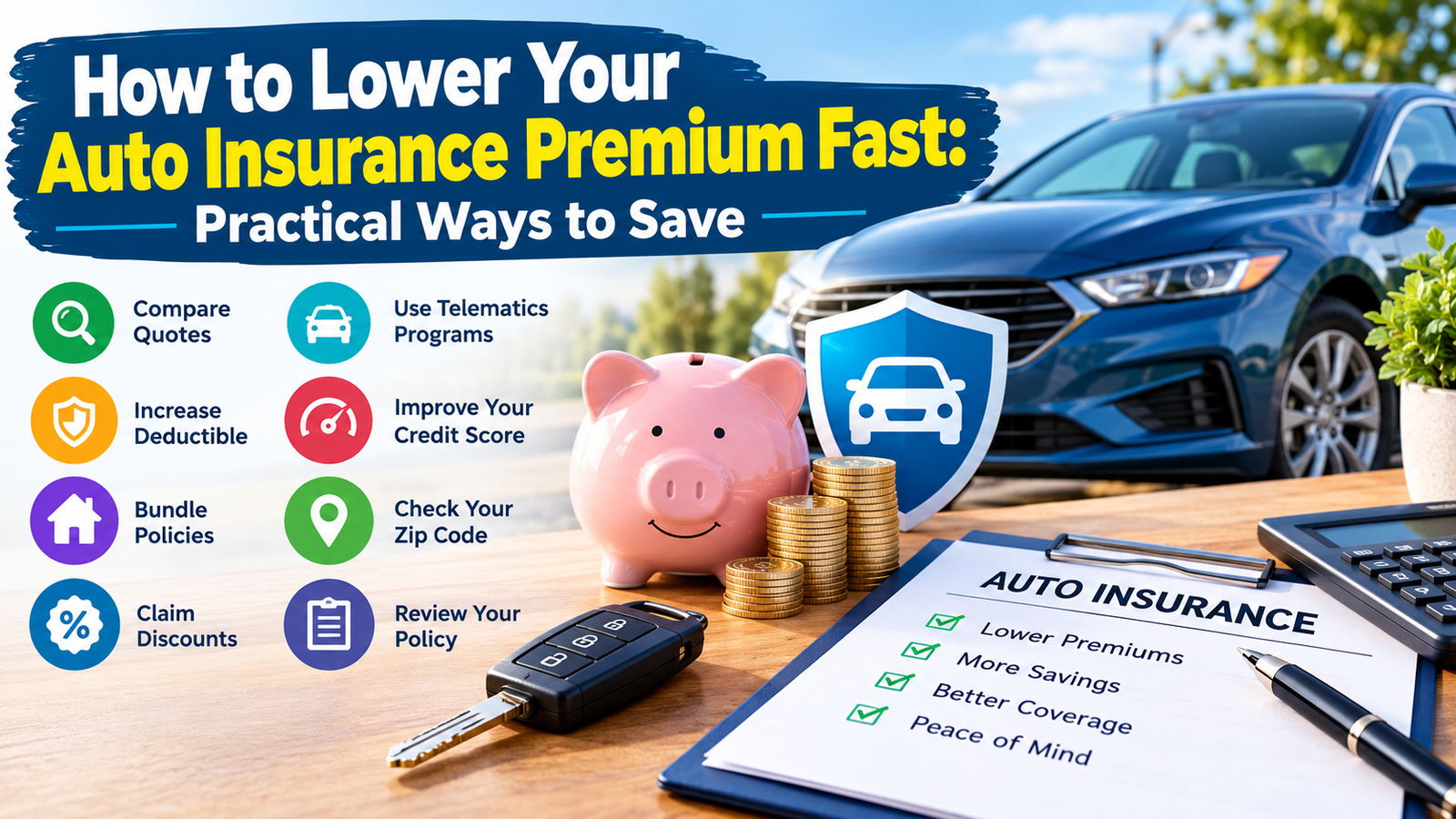

Auto insurance rates have increased substantially nationwide over the past few years, but drivers rarely have to simply pay whatever rate hike arrives in their renewal notice.
This guide walks through actionable, direct steps that meaningfully lower your car insurance premiums—focusing on specific discount programs, deductible strategies, timing tactics, and carrier negotiation techniques that generate real savings within your upcoming renewal cycle.
Compare Quotes From Multiple Carriers at Every Renewal
The most effective way to reduce car insurance costs is gathering quotes from competing insurers at every policy renewal, rather than remaining with the same carrier for years. Insurance companies price the exact same driver differently based on their proprietary loss algorithms, target customer demographics, and reinsurance costs. The carrier offering you the lowest rate this year may not be the cheapest next year, even if your driving history remains completely clean.
Brand loyalty is rarely rewarded with the best pricing. In fact, many companies apply “price optimization” practices that charge existing policyholders higher rates while offering aggressive discounts to acquire new customers. Spend 30 to 45 minutes comparing at least three quotes using identical liability limits and collision/comprehensive deductibles so you compare truly equivalent policies.
Increase Your Deductible Strategically
Raising your collision and comprehensive deductible from $500 to $1,000 typically lowers your annual premium by a noticeable percentage, because you agree to absorb more out-of-pocket costs for minor physical damage claims.
This approach works well for motorists with a solid emergency savings cushion that can easily cover the higher deductible if an accident occurs. Calculate the numbers on your policy—frequently, the annual premium reduction recoups the $500 deductible increase after just a couple of claim-free years.
Bundle Auto and Home Policies With the Same Insurer
Purchasing car insurance alongside homeowners, condo, or renters insurance from the same company activates a multi-policy discount, often reducing total premiums by 10% to 25%. Insuring multiple cars on a single policy similarly unlocks multi-vehicle savings.
However, always verify that the total bundled cost is genuinely cheaper than buying the best standalone auto and home policies separately, as bundling does not guarantee the lowest combined price in every market.
Ask About Every Policy Discount Available
- Good Student Discount: For young drivers under 25 who maintain a B average or 3.0 GPA.
- Low-Mileage Discount: For individuals with short commutes, remote workers, or retirees.
- Defensive Driving Courses: Completing an approved state defensive driving class frequently lowers premiums for three full years.
- Professional & Alumni Affiliations: Corporate group rates, union discounts, and university alumni affiliations.
- Paperless Statements & Auto-Pay: Modest ongoing discounts for electronic billing and automated recurring bank drafts.
- Vehicle Safety & Anti-Theft Devices: Factory-installed alarms, GPS recovery systems, and automatic emergency braking features.
Enroll in a Telematics or Usage-Based Driving Program
Most major auto insurers offer usage-based telematics programs that monitor driving behavior—such as speed, sudden braking, mileage, and late-night driving—via a smartphone app or OBD-II port device. Cautious drivers who rarely brake hard and avoid midnight driving routinely see substantial premium reductions within a few months of enrollment.
Note that certain programs can increase your rates if telematics data detects aggressive driving habits, so review program rules before signing up. However, many insurers guarantee that your premium will not increase during the initial trial period regardless of tracked habits.
Review Policies to Eliminate Redundant Coverage
Drivers operating older vehicles valued under a couple thousand dollars may find it cost-effective to drop collision and comprehensive coverage entirely. If an annual physical damage premium equals 10% to 20% of your vehicle’s total market value, paying for full coverage provides minimal financial protection. Additionally, drop paid roadside assistance or rental reimbursement if these benefits are already included through your premium credit card or auto club membership.
Improve Your Credit-Based Insurance Score
In states where legally permitted, insurance providers utilize credit-based insurance scores to price policies, based on actuarial links between credit stability and claim frequency. Paying bills on schedule, lowering revolving credit card balances, and minimizing hard inquiries strengthens your insurance score, unlocking lower rates at future renewal reviews.
Consider Pay-Per-Mile Coverage for Low Mileage
For motorists who work remotely, rely on public transit, or drive fewer than 7,000 miles per year, pay-per-mile auto policies offer massive savings. These programs charge a low base monthly rate plus a few cents per mile driven, providing fair pricing that reflects your actual minimal road exposure.
Time Your Quote Searches Around State Rate Filings
Insurance companies periodically file rate updates with state insurance departments, which take effect on future policy renewals. If an insurer submits an approved rate decrease in your state, shopping for a quote shortly after that filing takes effect secures lower pricing before existing customers see the adjustment on their policies.
Update Your Coverage After Major Life Changes
Milestones frequently unlock insurance savings. Moving closer to work reduces annual commuting mileage; getting married triggers lower actuarial risk categories; retiring removes commuter driving; and removing a young driver who has purchased their own policy removes the single highest rating factor from a family policy. Always alert your insurer to these changes promptly.
How Your Vehicle Choice Impacts Future Insurance Rates
Before purchasing your next car, get an insurance rate quote for the exact trim level and model. High-theft vehicles, sports cars with high horsepower, and models with expensive specialized replacement sensors cost significantly more to insure. Vehicles with top crash-test ratings and reasonable repair part costs carry much lower ongoing insurance bills.
Negotiate With Your Current Insurer Before Leaving
Before canceling your policy, call your current insurer’s retention team, mention the lower competing quotes you received, and ask if they can match the price. Underwriters often have discretionary authority to add overlooked discounts or adjust rating tiers for long-term policyholders with clean claim records, saving you the administrative hassle of switching.
Review Your Declarations Page Line by Line
When you receive a new policy, review your declarations page carefully to confirm that all agreed discounts, correct annual mileage estimates, and proper coverage limits are documented. Administrative errors occur frequently, and correcting them immediately ensures you receive every promised credit.
How Your Zip Code Influences What You Pay
Insurers price coverage heavily around your local territory, accounting for neighborhood vehicle theft rates, accident frequencies, and hail or severe storm risks. Motorists living just a few miles apart across municipal boundaries often pay noticeably different premiums purely due to geographical zip code calculations.
Frequently Asked Questions (FAQs)
How often should I shop for a new auto insurance quote?
Compare quotes at every policy renewal, or at least once per year. Rate filings and competitor pricing strategies fluctuate constantly across insurance carriers.
Does canceling an auto insurance policy early hurt my rates elsewhere?
No. As long as your new policy starts on or before the cancellation date of your old one, avoiding any lapse in coverage, switching carriers carries zero negative impact on your insurance score.
Will a telematics program always lower my rate?
Not automatically. The discount depends on your actual driving habits during monitoring. However, most programs provide a discount simply for enrolling, and many guarantee no rate increases during the initial trial period.
The Bottom Line
Lowering your auto insurance premium quickly requires actively shopping multiple carriers at renewal, claiming all applicable vehicle and driver discounts, aligning deductibles with your emergency savings, and considering telematics or pay-per-mile programs if you drive infrequently. Setting a calendar reminder to collect three competing quotes before each renewal date is the single most reliable habit to prevent overpaying for vehicle coverage.