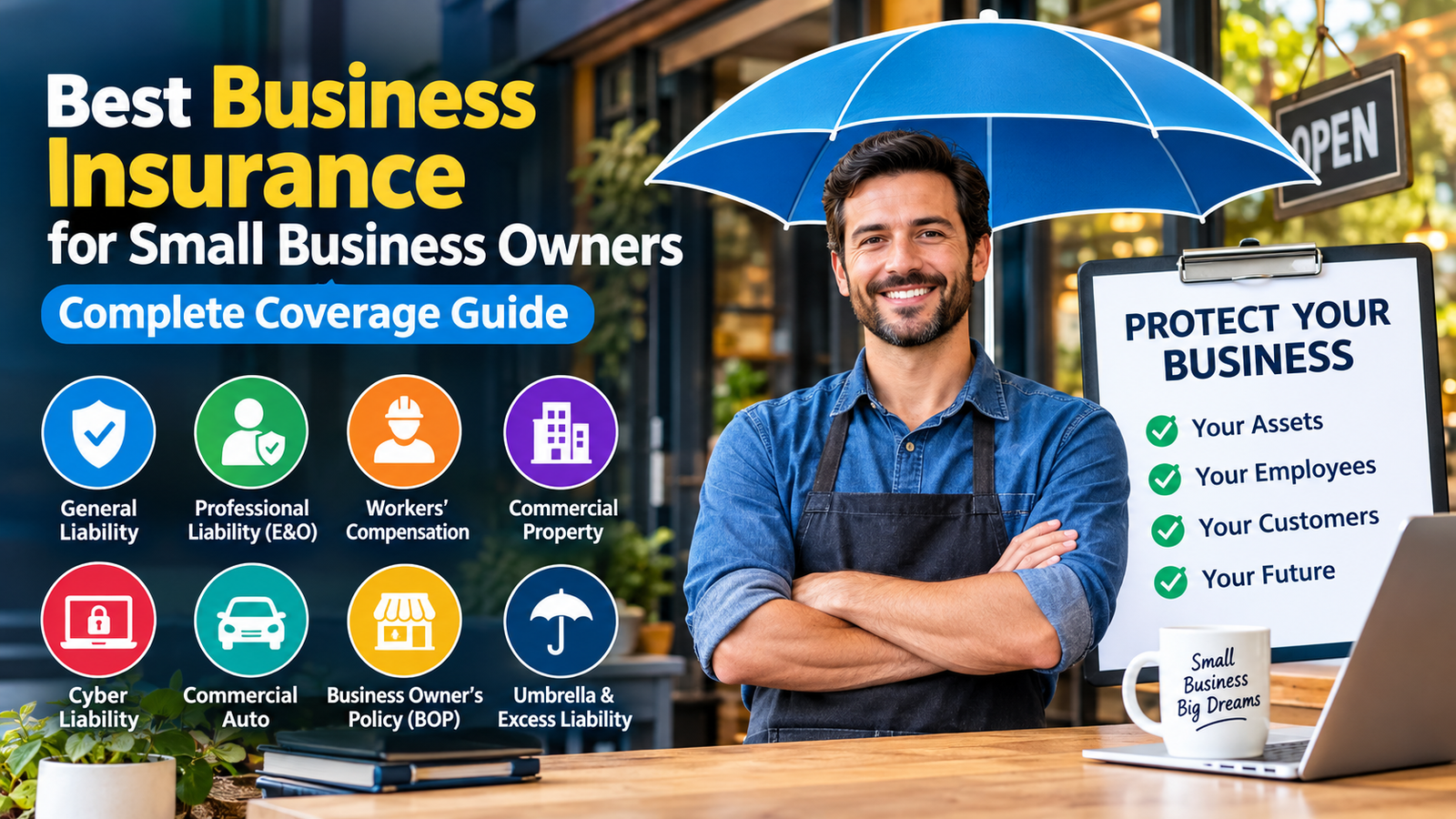

A single uncovered customer lawsuit, warehouse fire, or employee workplace injury can wipe out years of hard-earned small business revenue or force a company to close permanently. Yet many owners either forgo coverage to cut overhead or purchase policies that fail to cover their true operational risks.
This guide explains which types of business insurance are genuinely essential, typical pricing expectations, common coverage blind spots owners miss, and how to construct a comprehensive insurance plan tailored to your industry without paying for unnecessary add-ons.
General Liability Insurance: The Essential Foundation
General liability insurance provides coverage against third-party bodily injury, property damage, and personal or advertising injuries (such as copyright claims in marketing campaigns or libel allegations) resulting from your business operations.
This is usually the very first policy a business purchases, covering incidents like a customer tripping in your shop or an employee accidentally damaging a client’s facility while working on-site. Commercial property leases and enterprise client contracts almost universally require proof of general liability before you can move into a commercial unit or execute project agreements.
Professional Liability (Errors & Omissions) Coverage
While general liability handles physical bodily injuries and property accidents, professional liability insurance—often called errors and omissions (E&O)—protects against claims that your professional services, advice, or design caused a client financial harm, such as a missed contractual deadline or flawed strategic advice.
This coverage is indispensable for consultants, IT specialists, accountants, marketing firms, real estate brokers, and any professional whose primary deliverable is technical knowledge rather than physical inventory, as standard general liability policies specifically exclude professional service disputes.
| Policy Type | What It Typically Covers | Who Needs It Most |
|---|---|---|
| General Liability | Bodily injury, third-party property damage, advertising claims | Virtually every operating business |
| Professional Liability (E&O) | Service oversights, technical mistakes, professional negligence | Consultants, agencies, accountants, legal & tech pros |
| Workers’ Compensation | Employee medical bills, disability payouts, missed wages | Any business employing staff (often mandated by law) |
| Commercial Property | Physical office/store, manufacturing tools, inventory stock | Companies maintaining physical facilities or expensive equipment |
| Cyber Liability | Data breach forensics, customer alerts, ransomware response | Any company storing customer records or processing digital payments |
Workers’ Compensation: A Mandatory Legal Requirement
Nearly all state laws require companies with employees to maintain workers’ compensation insurance. This policy funds healthcare expenses and replaces lost wages for workers hurt on the job, in exchange for employees giving up the right to sue their employer for workplace accidents.
State thresholds vary, but improperly classifying regular workers as independent contractors to bypass workers’ comp mandates can lead to severe fines, state tax audits, and personal financial liability for the business owner.
Commercial Property and Business Interruption Coverage
Commercial property insurance shields your tangible assets—buildings, leased leasehold improvements, raw inventory, IT hardware, and signage—against destruction from fires, windstorms, vandalism, or theft. Adding business interruption coverage replaces lost operating income and pays payroll or rent if physical damage forces you to shut down temporarily during repairs.
Cyber Liability Insurance for Modern Small Businesses
Small businesses are targeted by cyber criminals frequently because smaller enterprises rarely maintain enterprise-grade cybersecurity. Cyber liability insurance covers forensics investigations, legal defense, mandatory customer breach notification, and credit monitoring services following a hack or ransomware attack. Any firm managing customer credit cards, addresses, or medical records should treat cyber coverage as a core policy.
Commercial Auto Insurance and Non-Owned Auto Endorsements
Standard personal auto policies exclude coverage for vehicles driven for commercial duties, meaning claims can be denied if an accident happens while delivering goods or traveling between job sites. If employees use their personal cars for company errands, carrying a commercial auto policy or adding a Hired and Non-Owned Auto (HNOA) endorsement is essential to close this liability gap.
Business Owner’s Policy (BOP): A Practical Coverage Bundle
A Business Owner’s Policy (BOP) packages general liability and commercial property coverage into one policy at a lower rate than purchasing both independently. Ideal for small to mid-sized firms with standard operational risk, a BOP lets you add endorsements like business interruption and equipment breakdown, providing an affordable starting foundation.
How Insurance Companies Price Small Business Policies
Premiums are determined by your North American Industry Classification System (NAICS) code, gross annual sales, total payroll (especially for workers’ comp), workforce size, past claims, and chosen policy limits. High-hazard fields like commercial roofing or restaurants naturally pay higher rates than professional consulting firms due to greater injury and property risks.
Critical Coverage Gaps Many Business Owners Overlook
- Relying on Homeowners Insurance: Standard home policies generally exclude home-based business inventory and business client liabilities.
- Underestimating Business Interruption Time: Setting interruption limits for only four weeks when rebuilding after a fire typically takes six months.
- Ignoring Cyber Risks: Assuming a company is “too small to get hacked” despite collecting customer emails and digital payments.
- Stale Coverage Limits: Leaving five-year-old policy limits in place after company revenue and staff have doubled.
Umbrella and Excess Liability for Expanding Companies
As your business scales in foot traffic and revenue, standard $1 million general liability limits may prove inadequate in a catastrophic claim. Commercial umbrella insurance supplies extra liability coverage above your primary policy limits in increments of $1 million for a modest additional annual premium.
Certificates of Insurance (COI) and Client Requirements
Corporate clients, landlords, and municipal agencies regularly require proof of coverage before finalizing contracts, provided via a Certificate of Insurance (COI). Many contracts will also ask to be listed as an “additional insured,” extending your policy’s legal defense to them for claims connected to your contracted work.
Updating Policies as Your Business Grows
A policy designed when you operated solo will leave you underinsured after adding trucks, hiring staff, or opening a second retail shop. Scheduling an annual insurance audit around policy renewal ensures your coverage parameters mirror your actual operational size.
Working With an Independent Commercial Insurance Broker
An independent insurance broker can market your risk profile across multiple commercial insurance carriers simultaneously. For businesses with niche operational exposures, an independent broker frequently finds industry-specific packages that single-carrier captive agents cannot access.
How to File an Insurance Claim Effectively
If an incident occurs, notify your insurance carrier promptly, document the damage thoroughly with photographs, and avoid making statements admitting fault before speaking with your claims adjuster. Storing digital copies of your policy documents in cloud storage ensures you access policy numbers instantly even if your physical office is damaged.
Frequently Asked Questions (FAQs)
Do I need business insurance if I am a sole proprietor without employees?
Yes. General liability protects your personal assets from third-party injury claims or property damage. Additionally, professional liability is necessary if you provide consulting, design, or specialized services.
How much does small business insurance typically cost?
Costs vary widely depending on your industry classification, annual payroll, and coverage limits. The only reliable way to know your exact expense is by requesting customized quotes based on your specific operational profile.
Can I bundle multiple business policies for a discount?
Yes. A Business Owner’s Policy (BOP) packages general liability and property insurance at a discounted rate, and insurers routinely offer multi-policy discounts when adding commercial auto or workers’ compensation.
The Bottom Line
Small business insurance requires selecting policies tailored to your industry, workforce, digital data holdings, and physical assets. Beginning with general liability, adding professional liability or cyber coverage as needed, and securing workers’ compensation the moment you hire staff protects your enterprise from crippling financial liabilities. Reviewing policies annually ensures your insurance coverage expands smoothly alongside your business.