
The ongoing debate between term life and whole life insurance represents one of the most critical decisions in personal financial planning. Yet aggressive sales pitches from commission-driven agents have confused consumers for decades.
This guide cuts through the sales jargon to break down what each policy actually provides, how the mathematical returns compare over decades, which scenarios genuinely require permanent coverage, and how to make a clear, objective decision that protects your family’s financial security.
The Core Structural Differences
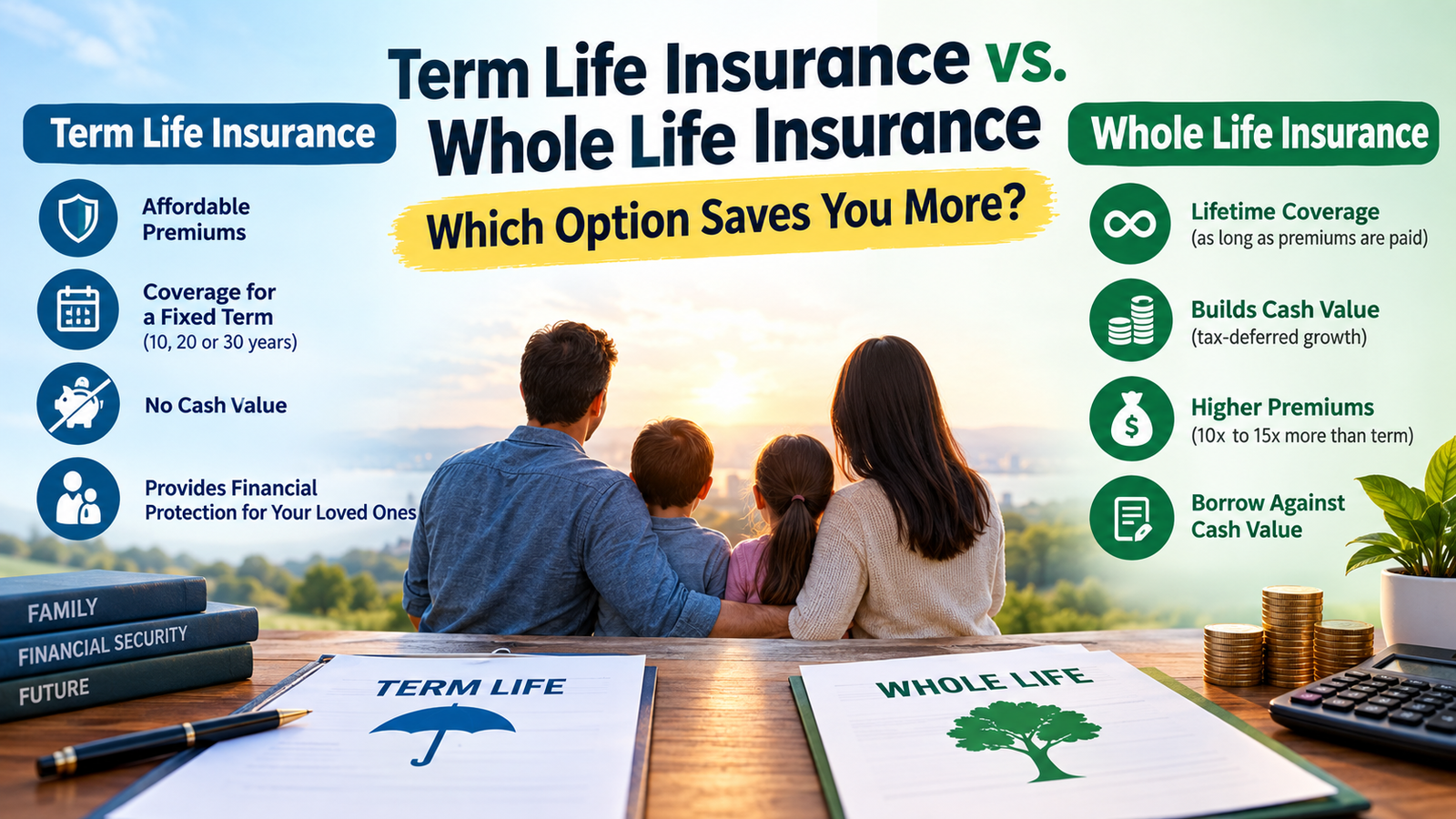
Term life insurance provides straightforward death benefit protection for a specified duration (such as 10, 20, or 30 years). It accumulates zero cash value and pays out nothing if you outlive the policy term.
In contrast, whole life insurance pairs a permanent death benefit with a tax-deferred cash value savings component that grows at an insurer-determined rate, remaining active for your entire lifetime as long as premiums are paid. This structural divide explains the dramatic price difference: term covers mortality risk during a limited window, whereas whole life must fund a guaranteed future payout, build internal reserves, and absorb substantial insurer overhead.
| Key Policy Feature | Term Life Insurance | Whole Life Insurance |
|---|---|---|
| Coverage Duration | Fixed term (10 to 30 years) | Lifelong protection (as long as premiums are paid) |
| Cash Value Component | None | Grows steadily on a tax-deferred basis |
| Premium Cost | Significantly lower | 10x to 15x higher for equivalent death benefit |
| Premium Predictability | Level rate for the chosen term | Guaranteed level rate for life |
| Financial Flexibility | Fixed protection that expires at term end | Ability to borrow against accumulated cash value |
Why the “Buy Term and Invest the Difference” Math Holds Up
The classic personal finance strategy—buying affordable term coverage and directing the premium savings into index funds or retirement accounts—remains mathematically superior for most households.
Historically, diversified stock market returns consistently surpass the modest guaranteed returns inside whole life cash value accounts. Over 20 or 30 years, investing the premium difference typically produces a significantly larger nest egg while providing maximum death benefit coverage during your prime working and parenting years. The primary requirement is personal discipline to actually invest the savings rather than spending them.
Scenarios Where Whole Life Insurance Genuinely Makes Sense
Permanent life insurance is appropriate in specific, specialized circumstances:
- Lifelong Dependents: Parents caring for a child with special needs who will require financial support long after the parents pass away.
- Estate Tax Planning: High-net-worth families utilizing irrevocable life insurance trusts to provide liquidity for estate taxes without liquidating illiquid assets.
- Business Succession: Business partners funding buy-sell agreements where permanent coverage ensures buyout funds remain accessible regardless of when a partner passes away.
- Maxed-Out Retirement Vehicles: High-income earners who have completely maximized 401(k)s, IRAs, and HSAs and desire supplementary tax-deferred growth.
The Hidden Costs and Fees in Whole Life Policies
Whole life policies carry steep surrender charges during their early years. If you cancel within the first 5 to 10 years, you receive substantially less than the total premiums paid, often walking away with nearly zero cash value.
Furthermore, hefty upfront agent commissions and administrative charges reduce initial cash value growth. Reviewing the policy illustration’s “guaranteed” cash value column (rather than optimistic non-guaranteed projections) reveals how slowly equity accumulates early on.
Universal and Variable Life: The Flexible Alternatives
Universal life insurance allows policyholders to adjust premiums and coverage limits within boundaries, with cash accumulation tied to market interest rates. Variable life connects cash value directly to investment sub-accounts similar to mutual funds, offering higher upside alongside market risk. These options require ongoing management to prevent policy lapse if investment returns decline.
A Practical Framework for Choosing Your Policy
- If you need income replacement during working years or mortgage payoff protection: Term Life is the clear winner.
- If you have a permanently disabled child, complex estate tax obligations, or business buy-sell terms: Permanent coverage is appropriate.
- If considering whole life strictly as “forced savings”: Compare its guaranteed return against automated monthly contributions to standard low-cost index funds first.
Converting Term Coverage to Permanent Policies
Many term insurance contracts feature a term conversion rider, allowing policyholders to convert term coverage into permanent whole life without undergoing a new medical exam. This preserves affordable protection during early working years while offering the option to lock in permanent coverage later if health problems arise.
Comparing Real Life Insurance Costs Across Ages
The price disparity between term and permanent insurance expands dramatically as applicants age. A healthy 30-year-old can buy a $500,000 20-year term policy for under $30 per month, while an equivalent whole life policy could cost hundreds monthly. Securing coverage while young and healthy locks in preferred pricing for decades.
How Agent Commissions Influence Policy Recommendations
Understanding broker incentives provides valuable perspective. Term policies generate modest one-time first-year commissions, whereas whole life sales often pay agents 50% to 100% or more of the entire first-year premium. While many agents give honest advice, this compensation disparity explains why permanent policies are marketed so aggressively.
The Impact of Inflation on Fixed Death Benefits
A fixed $500,000 death benefit will have noticeably lower purchasing power after 25 years of regular inflation. Whether carrying term or whole life, periodically assess your coverage amount to ensure death benefit proceeds keep pace with your family’s real living expenses.
Re-Evaluating Life Insurance as Life Circumstances Change
Life insurance needs evolve as mortgages are paid off and children complete college. As term policies approach expiration, reassess whether you need to extend coverage, convert a portion to permanent insurance, or let it expire because your accumulated savings provide full self-insurance.
How Health Status Changes Impact Future Insurability
Locking in level-term insurance while in peak health shields you from future medical developments. If you develop a chronic health condition years later, the insurer cannot raise your premiums or revoke your coverage during the active term, providing essential peace of mind.
Frequently Asked Questions (FAQs)
Can I hold both term and whole life insurance simultaneously?
Yes. Many families use a “laddered” strategy: holding a modest permanent policy for end-of-life expenses alongside a larger term policy during working years when debt and child-rearing costs are highest.
What happens to whole life cash value upon the insured’s death?
Under standard whole life policies, beneficiaries receive the face-value death benefit only; the insurer keeps the accumulated cash value unless a specific (and more expensive) rider is attached.
Is whole life insurance considered a good investment vehicle?
Generally no. High internal administrative expenses, surrender fees, and low guaranteed growth rates make it far less efficient than investing directly in low-cost index funds and tax-advantaged retirement accounts.
The Bottom Line
For the vast majority of families seeking income protection, term life insurance provides maximum coverage at a fraction of the cost, leaving surplus cash flow available for market investing. While permanent insurance serves specialized estate planning and lifelong dependency needs, it should never be defaulted to as a generic savings vehicle. Running your personal numbers and speaking with a fee-only fiduciary advisor ensures you select coverage tailored to your family’s real financial priorities.