
Following a serious car crash, deciding whether to retain an attorney—and picking the right one—can determine whether your hospital bills, missed wages, and rehabilitation costs are completely reimbursed or if you end up paying out-of-pocket for expenses the negligent driver’s insurer should have covered.
This guide explains what personal injury attorneys do, how contingency fee billing works, and the essential qualities to look for when selecting legal counsel after an auto collision.
Why Insurance Adjusters Treat Represented Claimants Differently
Insurance adjusters are specifically trained to reduce claim payouts. People without legal counsel are statistically far more prone to accepting quick, lowball settlement offers—especially when medical bills and lost income create urgent financial pressure.
When a lawyer steps in, insurance companies recognize the case is being handled by a professional who knows true claim values, evidence standards, and how to file a real lawsuit. This immediately shifts settlement negotiations in your favor.
How Contingency Fees Work in Auto Accident Claims
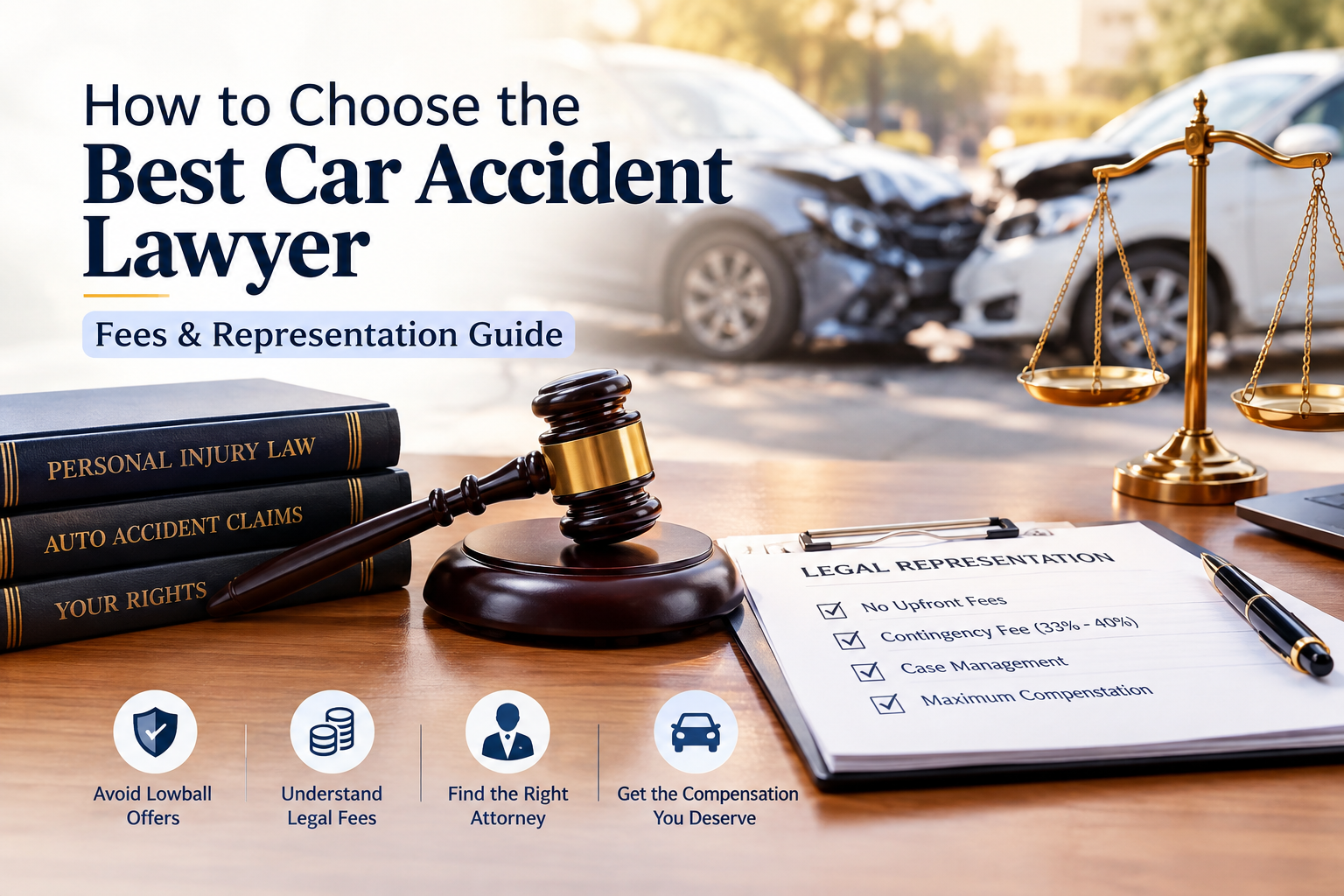
Virtually all car accident attorneys operate on a contingency fee model. This means you owe zero upfront fees; the lawyer only takes a percentage of your settlement or court verdict (typically between 33% and 40%) if they successfully win compensation on your behalf.
This payment structure removes financial hurdles to quality legal counsel and aligns the attorney’s goals with yours, since higher payouts mean higher compensation for both parties. Out-of-pocket case costs—such as police reports, medical documentation fees, and accident reconstruction experts—are usually advanced by the firm and reimbursed from the final settlement.
| Factors Determining Case Value | Practical Examples |
|---|---|
| Economic Damages | Medical expenses, future physical therapy, lost income, vehicle repairs |
| Non-Economic Damages | Pain and suffering, mental anguish, loss of life enjoyment |
| Liability Clarity | Clear evidence demonstrating that the other motorist was 100% at fault |
| Policy Limits | Maximum insurance coverage available under the liable party’s policy |
Legal Steps to Take Immediately After an Accident
- Seek Medical Care Quickly: Even if you feel fine, see a doctor right away. Hidden injuries may not hurt immediately, and gaps in treatment give insurers an excuse to claim you weren’t truly hurt.
- Decline Recorded Statements: Never give a recorded statement to the other driver’s insurance adjuster before consulting an attorney; adjusters use these statements to devalue claims.
- Preserve Crash Scene Evidence: Take clear photographs of vehicle damage, street signs, and visible skid marks, and obtain the official police report.
- Track All Expenses: Maintain an organized folder containing medical bills, prescription receipts, and records of days missed from work.
- Stay Off Social Media: Refrain from posting about the accident, your injuries, or daily activities, as defense attorneys actively monitor public profiles to dispute injury severity.
How Fault and Comparative Negligence Impact Your Payout
Most states follow comparative fault statutes, which diminish your total payout by your percentage of fault. In some states, being deemed over 50% responsible prevents you from collecting any damages at all.
A skilled attorney collects evidence to minimize any comparative fault assigned to you—protecting your final compensation in complex multi-car collisions or disputed intersection accidents.
Handling Multiple Insurance Policies and Layers of Coverage
Serious collisions frequently involve multiple insurance resources beyond the at-fault motorist’s basic policy. This includes your own underinsured/uninsured motorist (UM/UIM) coverage or commercial umbrella policies if a company vehicle caused the crash.
An experienced attorney identifies all available insurance avenues, which is crucial in severe injury cases where one driver’s minimum liability policy falls short of covering total hospital costs.
When Does a Car Crash Case Require Litigation?
Although most auto claims settle through informal negotiations, formal litigation becomes necessary when fault is contested, when permanent injuries warrant far more than the insurer’s final offer, or when an insurer acts in bad faith by stalling payments.
Hiring an attorney with a proven courtroom trial record matters, as insurance companies know which law firms quickly accept cheap settlements versus those willing to take a case before a jury.
Assessing an Attorney’s Auto Accident Experience
Attorneys who focus heavily on motor vehicle collisions possess specialized insight into crash reconstruction, defense tactics, and medical witness testimony. Ask prospective lawyers about their specific track record handling collisions similar to yours—such as commercial truck crashes, pedestrian impacts, or spinal cord injuries.
Knowing the Statute of Limitations for Auto Claims
Every state enforces a strict statutory deadline for filing a car accident lawsuit, typically ranging from one to several years from the crash date. Missing this legal deadline forfeits your right to seek financial recovery permanently, making early legal consultation essential to protect your options.
Property Damage Claims vs. Personal Injury Claims
Vehicle repair or total-loss settlements are processed separately from bodily injury claims. Because property damage is straightforward to verify, it often resolves within weeks. Many law firms allow clients to handle vehicle repairs directly while the attorney focuses on the more complex bodily injury negotiation.
What if the Other Driver’s Insurance Denies Your Claim?
An initial claim denial is not the end of the road. Insurers often use denials as an early negotiation maneuver. A formal appeal supported by witness statements, crash reconstruction evidence, and the threat of litigation frequently forces the insurer to re-evaluate their stance.
How Lost Wages and Future Earnings Are Calculated
Beyond direct missed paychecks shown on pay stubs, injury claims can include diminished future earning capacity, self-employment income disruptions, and lost benefits such as retirement contributions or accrued sick days. A thorough lawyer ensures all economic losses are accounted for.
Managing Delayed Injuries and Symptoms After a Collision
Certain injuries—such as concussions, whiplash, and internal soft-tissue tears—may take days or weeks to display painful symptoms. Seeing a physician immediately after the crash creates a baseline record that prevents insurance companies from disputing that your injuries originated from the crash.
Receiving Medical Treatment on a Lien Basis
If you lack health insurance or cannot afford copays, certain medical clinics agree to treat accident victims on a “medical lien.” Under this arrangement, doctors provide immediate care and delay collection until your case settles, paid directly from the settlement proceeds.
Rideshare and Commercial Truck Accidents vs. Standard Crashes
Accidents involving commercial freight carriers or rideshare companies (like Uber or Lyft) involve complex corporate liability rules and multi-million-dollar insurance policies. An attorney experienced in commercial carrier claims knows how to navigate these layered corporate defenses.
Why Consistent Documentation Protects Your Entire Claim
Insurance adjusters carefully look for inconsistencies between police report remarks, medical doctor intake notes, and your written statements. Maintaining clear, truthful, and consistent accounts across all medical and legal paperwork prevents the defense from attacking your credibility.
The Importance of an Attorney’s Expert Witness Network
Established personal injury attorneys work closely with reputable medical specialists, forensic crash investigators, and economic analysts who can testify about long-term rehabilitation costs. This professional network provides credible backing that unrepresented filers cannot easily access.
Initial Steps Toward Securing Legal Representation
If you were injured in a serious crash, schedule free consultations with two or three reputable local attorneys. Inquire about their case experience, fee terms, and trial history to find a legal partner who genuinely prioritizes your long-term recovery.
Why Acting Promptly Protects Your Health and Compensation
Delaying medical evaluations or legal representation weakens your claim: physical evidence fades, witness details blur, and insurers argue your delays indicate minor injuries. Moving promptly ensures both your physical health and your financial rights stay shielded.
Final Thought
The choices you make immediately following a motor vehicle collision—both medically and legally—impact your eventual recovery just as significantly as the crash itself.
Frequently Asked Questions (FAQs)
How soon after an accident should I contact a lawyer?
As soon as possible. Reaching out early helps secure crash evidence, prevents you from giving damaging recorded statements to insurers, and provides ample time to prepare a strong case before statutory deadlines.
What if the at-fault driver doesn’t have insurance?
If you carry uninsured motorist (UM) coverage on your own auto policy, your insurer steps in to cover medical expenses and damages. A lawyer helps explore all available insurance avenues.
Do I have to go to court if I hire a car accident lawyer?
Most auto injury claims settle during out-of-court negotiations. You will only go to trial if the insurance company refuses to offer a fair settlement that covers your documented damages.
The Bottom Line
Selecting the best car accident attorney requires finding a lawyer with extensive motor vehicle claim experience, transparent contingency fee arrangements, and a credible willingness to go to trial when needed. Taking prompt action—both by getting immediate medical attention and talking to an attorney before giving recorded statements—safeguards both your well-being and your full financial recovery.