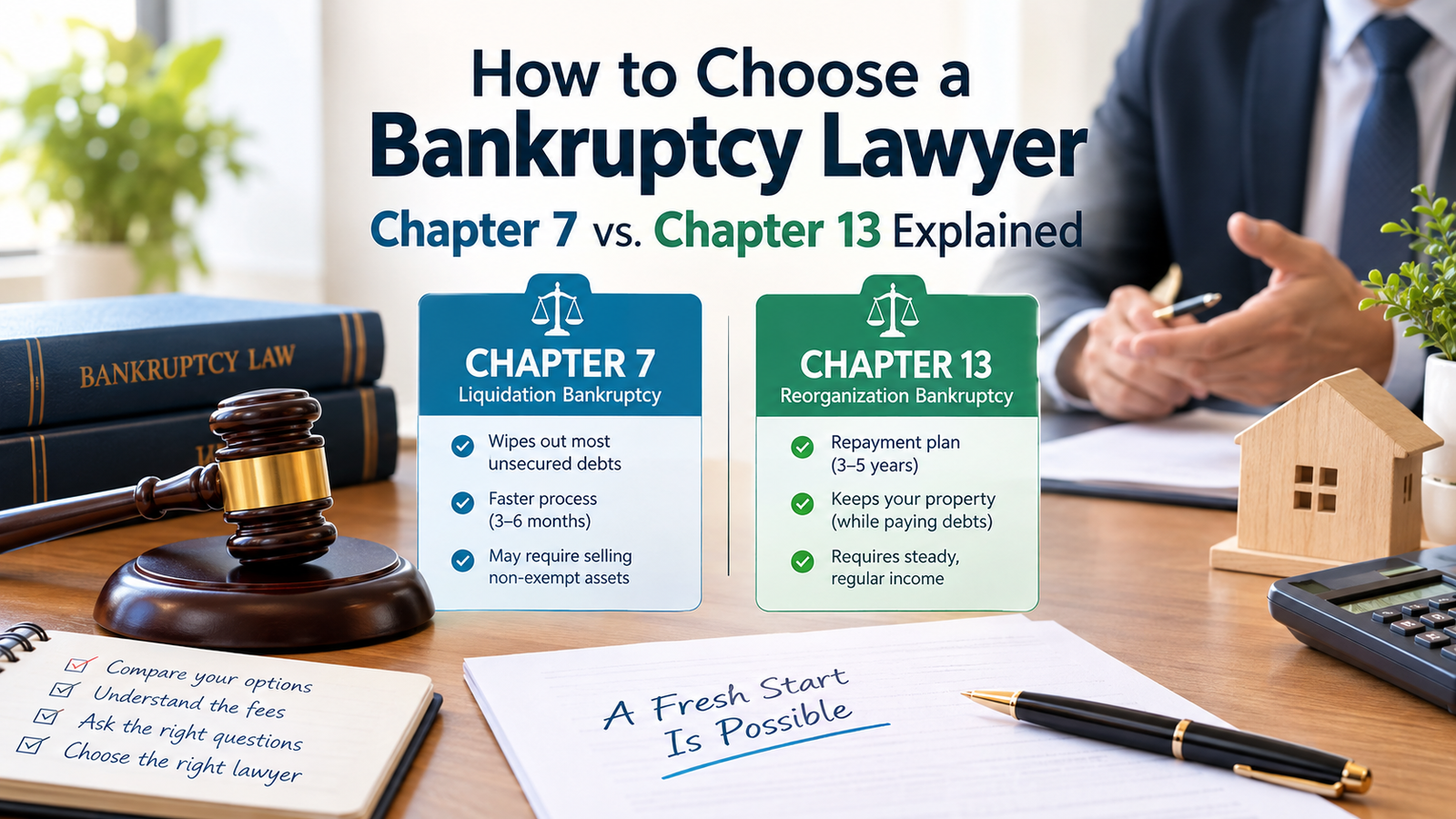

Deciding between Chapter 7 and Chapter 13 bankruptcy—and choosing the right attorney to lead you through that process—can determine whether you walk away from a financial crisis with a true fresh start or end up locked into a repayment plan that doesn’t fit your budget.
This guide explains the primary differences between both bankruptcy chapters, how legal fees are typically structured, and the key factors that should guide your choice of bankruptcy type and the lawyer who represents you.
Chapter 7: Liquidation Bankruptcy Basics
Chapter 7 bankruptcy, commonly referred to as liquidation bankruptcy, wipes out most unsecured debts—such as credit card balances and medical bills—usually within a few months of filing. In return, a court-appointed trustee has the right to sell non-exempt assets to repay creditors.
However, most everyday filers find that state and federal exemptions protect nearly all their essential property, including household goods, a primary vehicle, and a portion of home equity depending on local rules. Qualifying for Chapter 7 requires passing the “means test,” which compares your household earnings against your state’s median income.
Chapter 13: Reorganization Bankruptcy Overview
Chapter 13 bankruptcy establishes a court-approved repayment schedule, generally lasting between three and five years. During this time, you make steady monthly payments toward your debts based on your disposable income, and any eligible unsecured debt remaining at the plan’s conclusion is formally discharged.
This route is commonly chosen by filers who earn too much to pass the Chapter 7 means test, those who need to catch up on missed mortgage or car payments while keeping their property, or individuals holding non-exempt assets they want to protect from liquidation.
| Comparison Factor | Chapter 7 | Chapter 13 |
|---|---|---|
| Overall Timeline | Typically 3 to 6 months | 3 to 5 year repayment plan |
| Eligibility Rule | Must pass the state means test | Requires reliable, regular income |
| Asset Treatment | Non-exempt assets may be liquidated | Retain assets while paying through the plan |
| Best Suited For | Lower income, minimal non-exempt assets | Catching up on arrears, keeping property |
How Bankruptcy Lawyer Fees Are Structured
Chapter 7 attorney fees are almost always billed as a flat fee paid before filing, because bankruptcy rules prevent attorneys from collecting debts for past legal work once a case is submitted. Fees vary based on regional rates and the complexity of the case.
Chapter 13 fees are handled differently: a portion is usually paid upfront, while the remainder is incorporated directly into your monthly court repayment plan. This structure reflects the ongoing legal work required over several years to manage plan amendments and creditor responses.
Why Legal Experience Matters in Bankruptcy
Bankruptcy law involves intricate local exemption schedules, complex income calculations, and procedural deadlines where simple errors can cause a case dismissal or unnecessary loss of belongings.
A skilled bankruptcy attorney knows how to maximize property exemptions, properly account for allowable expenses on the means test, and represent your best interests during the formal creditors’ meeting.
Key Questions to Ask a Bankruptcy Lawyer
- Based on my specific income and debts, do you recommend Chapter 7 or Chapter 13, and why?
- What is your total fee, and what services are covered versus billed additionally?
- How will filing affect the property I want to keep, like my vehicle, home, or 401(k)?
- What is the anticipated timeline for my case from filing to final discharge?
- How many bankruptcy cases have you filed, and is bankruptcy your primary focus?
Debts Bankruptcy Discharges vs. Non-Dischargeable Debts
Bankruptcy routinely wipes out unsecured debts like personal loans, credit card balances, and medical bills. However, it generally does not erase student loans (barring rare proofs of undue hardship), recent back taxes, child support, alimony, or fines resulting from fraudulent acts.
Confirming which of your obligations can be legally discharged is vital before filing, ensuring the process provides the relief you actually need.
How the Means Test Determines Chapter 7 Qualification
The means test evaluates your average household income over the preceding six months against the median income for a family of your size in your state. If your income falls below the median, you automatically qualify for Chapter 7.
If your earnings exceed the state median, a secondary calculation factors in allowable living expenses to assess whether you have sufficient disposable income to fund a Chapter 13 repayment plan instead.
Credit Score Impact and Rebuilding Your Credit
A Chapter 7 filing remains on credit reports for up to 10 years, while Chapter 13 stays for up to 7 years. Despite this mark, many filers see their credit scores start improving within 12 to 24 months after discharge, especially when using secured credit cards and keeping payments on time.
For people who already had severely damaged credit with ongoing delinquencies, bankruptcy often serves as the turning point for recovery by halting negative reporting and eliminating old balances.
Bankruptcy Alternatives to Discuss First
Before proceeding with a court filing, a reputable attorney will discuss other options, such as negotiating direct settlements with lenders, working with non-profit credit counseling services, or evaluating whether certain debts are already judgment-proof.
An ethical attorney will honestly tell you if an alternative resolution can fix your financial situation without the long-term credit impact of bankruptcy.
The Automatic Stay: Immediate Creditor Protection
Filing for bankruptcy instantly activates the court’s “automatic stay.” This legal injunction stops most collection efforts, wage garnishments, phone calls, and creditor lawsuits immediately, giving you critical breathing room while your case moves forward.
Life After Bankruptcy: Practical Steps Forward
Following discharge, you can rebuild financial stability through credit-builder loans, secured cards, and responsible monthly budgeting. Completing the required debtor education course also offers helpful tools to maintain healthy long-term financial habits.
How Co-Signed Debts Are Handled
In Chapter 7, wiping out your personal responsibility on a co-signed loan leaves the co-signer solely liable for the balance. Make sure to discuss co-signed accounts with your lawyer in advance so you understand how friends or family members might be affected.
Reaffirmation Agreements on Secured Property
If you want to keep an asset tied to a loan (such as your vehicle) in Chapter 7, lenders often ask you to sign a reaffirmation agreement. This document waives the bankruptcy discharge for that specific loan, meaning you remain legally obligated to pay it.
What Happens at the 341 Meeting of Creditors?
Every filer must attend a brief meeting of creditors with the trustee. The trustee confirms your identity and asks brief questions under oath regarding your submitted forms. In most routine cases, this is a straightforward hearing rather than an intense interrogation.
Co-Debtor Protections Under Chapter 13
Unlike Chapter 7, Chapter 13 includes a co-debtor stay that shelters co-signers from aggressive collection calls, provided the joint obligation is being paid through your court plan.
What the Bankruptcy Discharge Order Means
Once your bankruptcy wraps up, the judge issues a formal discharge order legally erasing eligible debts. Any lender who tries to collect on a discharged debt after this point is in violation of federal court orders.
Moving Forward With Confidence
Filing for bankruptcy is a major step, but for millions of people overwhelmed by unmanageable debt, it provides a lawful, structured path to start over. Working alongside an experienced attorney makes the process smooth and manageable.
Selecting a Lawyer Who Guides You, Not Just Files Papers
The right bankruptcy lawyer will answer your questions clearly, outline risks in plain language, and make sure you understand every form before filing, keeping anxiety and unexpected hurdles to a minimum.
Final Thought
Bankruptcy exists as a legal safety net designed for challenging financial moments. Approaching it with trusted legal counsel transforms an intimidating ordeal into an organized road toward debt relief.
Frequently Asked Questions (FAQs)
Will I lose my house if I file bankruptcy?
Not necessarily. Homestead exemptions protect some or all home equity in most states. Furthermore, Chapter 13 lets homeowners cure delinquent mortgage payments over several years while retaining their house.
Can I file bankruptcy without a lawyer?
While you are legally permitted to file on your own (pro se), bankruptcy involves rigid technical rules where errors can lead to case dismissal or lost property. Hiring experienced legal counsel is strongly recommended.
How long does bankruptcy stay on my credit report?
Chapter 7 generally appears on credit bureau reports for up to 10 years, and Chapter 13 remains for up to 7 years. However, scores often begin rebounding well before those reporting periods conclude.
The Bottom Line
Picking between Chapter 7 and Chapter 13 depends on your income, property, and overall financial goals—whether you need the swift relief of Chapter 7 liquidation or the gradual repayment structure of Chapter 13. An experienced bankruptcy lawyer who evaluates your complete financial profile, explains all alternatives, and provides straightforward pricing gives you the strongest foundation for a fresh financial beginning.