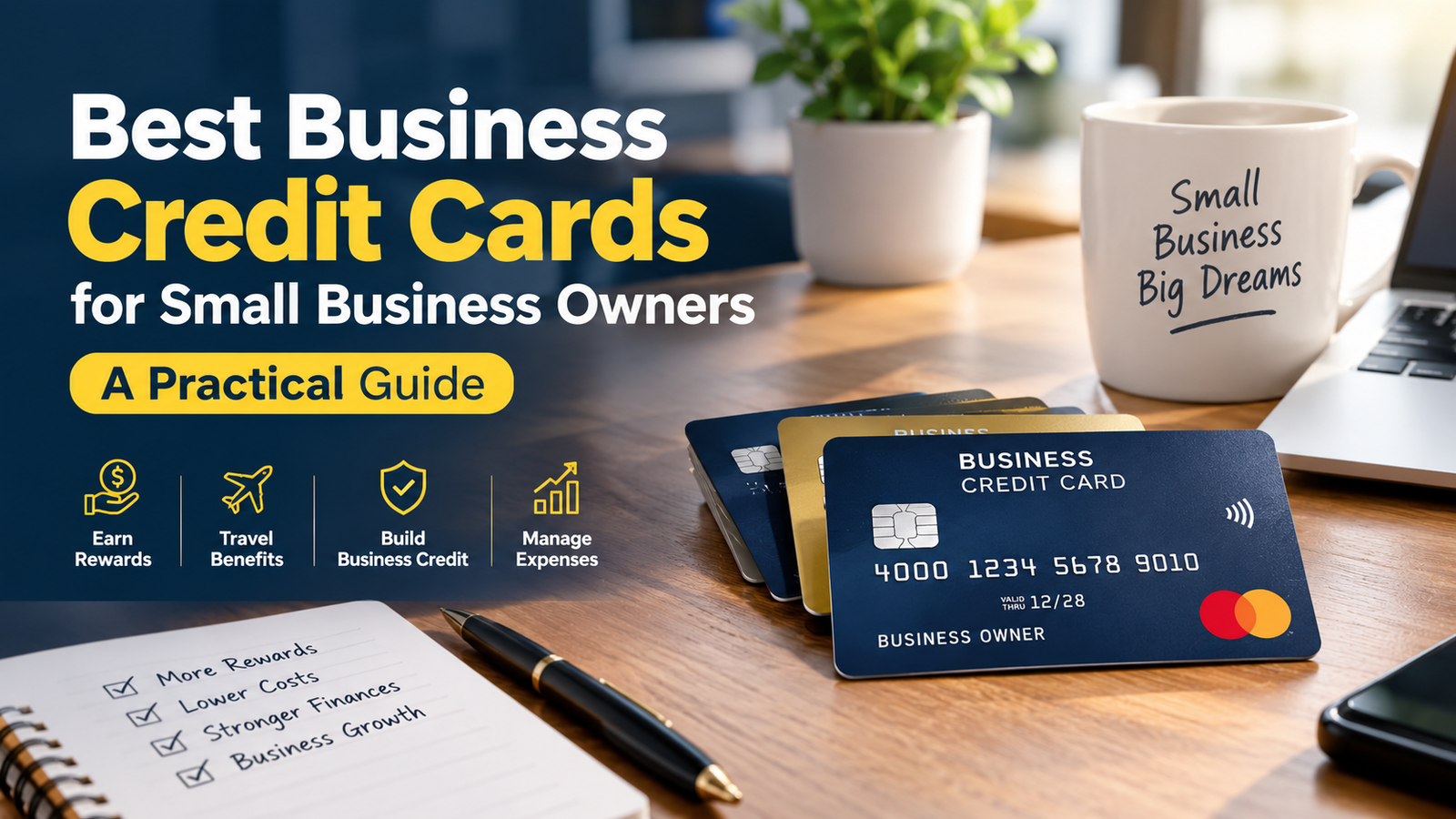

Selecting the ideal business credit card can return thousands of dollars back to your bottom line through cash back and rewards. Conversely, picking the wrong card often leads to paying unnecessary annual fees or missing out on interest-free financing that could have supported your working capital needs.
This guide explains how commercial cards differ from personal credit cards, which features matter most for small business operations, and how to evaluate card offers based on your company’s actual spending profile rather than generic recommendations.
Key Differences Between Business and Personal Credit Cards
Business credit cards are underwritten partly using your personal credit rating, particularly for startups without established financial histories. However, banks report monthly account activity primarily to commercial credit bureaus (such as Dun & Bradstreet, Experian Business, and Equifax Small Business).
This separation allows responsible usage to construct an independent business credit profile over time, which proves invaluable when applying for equipment financing or commercial bank loans later on. Additionally, business cards offer significantly higher credit limits to accommodate enterprise cash flow, alongside expense management tools like employee spending caps and downloadable accounting reports.
Personal Liability and the Personal Guarantee Requirement
The majority of small business credit cards include a standard personal guarantee clause, making you personally responsible for any unpaid balances if the business defaults. While large corporations can sometimes obtain corporate cards without personal guarantees, small business owners and sole proprietors must expect personal liability when opening accounts.
| Card Category | Best Suited For | Key Defining Feature |
|---|---|---|
| Cash Back Business Card | Companies seeking simple, direct bottom-line savings | Flat-rate or category-based statement credits |
| Travel Rewards Business Card | Companies with regular client travel and conferences | Airline miles, lounge access, hotel upgrades |
| 0% Intro APR Card | Financing equipment or seasonal inventory | Interest-free promotional purchasing window |
| Charge Card (No Preset Limit) | Businesses with heavy, fluctuating monthly inventory | Balances must be cleared in full every billing cycle |
Aligning Card Rewards With Your Business Expenses
The most valuable card for your business is the one that rewards the specific categories where you spend the most money. If your company spends heavily on online digital advertising, software subscriptions, and shipping, select a card offering 3% to 5% back on those exact categories.
Conversely, if your expenses are spread evenly across miscellaneous suppliers, a flat 2% cash back card on all purchases provides higher, more predictable value without category management.
Building Dedicated Business Credit Over Time
Establishing a strong business credit profile allows your company to qualify for competitive vendor financing and commercial credit lines based purely on its own financial strength. Key steps include obtaining a free D-U-N-S number from Dun & Bradstreet, opening net-30 accounts with reporting suppliers, and paying commercial card bills early.
Employee Cards and Built-in Expense Management
Most card programs allow business owners to issue free employee cards with individualized credit limits and spending alerts. Real-time digital dashboards eliminate the hassle of employee expense reimbursements and sync directly with accounting platforms like QuickBooks or Xero to streamline monthly bookkeeping.
When Are Business Card Annual Fees Worth Paying?
Premium business cards carry annual fees from $95 to $695. Paying a fee makes financial sense only if your company’s usage of airline fee credits, travel insurance, and bonus rewards tiers comfortably exceeds the cost. If your team travels rarely, a no-annual-fee cash back card is generally the more profitable choice.
Financing Equipment and Inventory With 0% Intro APR Cards
Business cards offering 0% promotional APR on purchases for 9 to 12 months serve as an inexpensive financing mechanism for machinery, new tools, or seasonal inventory buildup. This approach avoids the origination fees of traditional short-term bank loans, provided you formulate a disciplined plan to clear the balance before the standard rate takes effect.
Evaluating Sign-Up Bonuses and Spending Thresholds
Commercial cards frequently feature generous welcome bonuses after meeting spending thresholds in the first 90 days. Always verify that your typical operational overhead naturally meets the required spending amount without forcing you to make premature purchases just to unlock points.
Understanding Business Credit Card Approval Criteria
When reviewing an application, banks assess both your personal credit history and your company’s operational profile (annual revenue, years in business, and industry sector). Early-stage startups with modest revenues can still secure approval if the owner possesses a strong personal credit score.
How to Redeem Business Rewards for Maximum Value
Cash back provides maximum simplicity—depositing cash straight back into your business checking account with zero redemption restrictions. Travel miles and transferable points can deliver higher value per point when booked for premium flights, but require extra planning around award availability.
Upgrading Your Business Cards as Your Company Expands
A basic credit card suitable for a solo freelancer may become inadequate as you hire staff, manage higher inventory volumes, or incur recurring shipping fees. Periodically audit your card portfolio against your current spending patterns to ensure your accounts still deliver maximum value.
Single All-Purpose Card vs. Multiple Specialized Cards
While managing one card keeps accounting simple, pairing a flat-rate card with a specialized category card (such as a card delivering 5% back on office supply chains and internet bills) significantly boosts total annual rewards without adding significant administrative overhead.
Preparing Your Application for Higher Approval Odds
Before applying, have your business Tax ID (EIN), formal legal entity name, estimated annual business revenue, and personal income numbers ready. Submitting accurate and consistent financial data avoids automated identity verification delays.
Tax Rules for Business Credit Card Rewards
In most jurisdictions, credit card cash back and points are considered non-taxable rebates or discounts on business purchases rather than taxable company income. Discuss card reward categorization with your CPA to ensure bookkeeping entries remain accurate.
Separating Expenses to Simplify Tax Season
Channeling all business overhead onto a dedicated business credit card maintains a distinct partition between personal and corporate spending. This separation provides a clear audit trail and makes tracking tax deductions straightforward.
Secured vs. Unsecured Business Credit Cards
Entrepreneurs with compromised personal credit can use secured business credit cards. Backed by a refundable security deposit, these cards report on-time payments to commercial bureaus, helping founders qualify for standard unsecured credit cards over time.
Fraud Protection and Disputing Charges
Business credit cards feature robust zero-liability fraud protections, allowing company owners to dispute unauthorized charges promptly through online banking portals. Review your cardholder agreement for specific timelines regarding billing dispute notifications.
Waiving Foreign Transaction Fees on Global Purchases
Businesses that purchase raw materials from overseas suppliers or send employees abroad should choose cards that waive foreign transaction fees. Avoiding typical 3% international surcharges saves meaningful capital over a full year of foreign trade.
Frequently Asked Questions (FAQs)
Do I need an established business entity to qualify for a business credit card?
No. Freelancers, independent contractors, and sole proprietors without formal LLCs or corporations can apply using their Social Security Number and reporting expected business revenues.
Will my business credit card appear on my personal credit report?
It varies by bank. Several issuers report account activity solely to commercial credit bureaus unless your account becomes seriously delinquent, while others report ongoing balances to personal bureaus as well.
Can I get a business card with no personal credit history?
It is difficult for newer businesses. Without a track record of company revenue, banks rely heavily on the owner’s personal credit score. Founders with limited personal credit typically start with secured business cards.
The Bottom Line
Finding the best small business credit card involves matching rewards structures to your largest expense categories, deciding between cash back and travel points, and utilizing features like employee spending controls. By keeping business and personal expenses separate, understanding personal guarantee obligations, and making consistent on-time payments, a business card transforms from a basic payment tool into a powerful asset for business growth.